How You Can Save US Wildlife
Get to know and love RAWA!

This blog was originally published in September, 2022 on Medium, but the content is still relevant (2024 update follows the original blog).
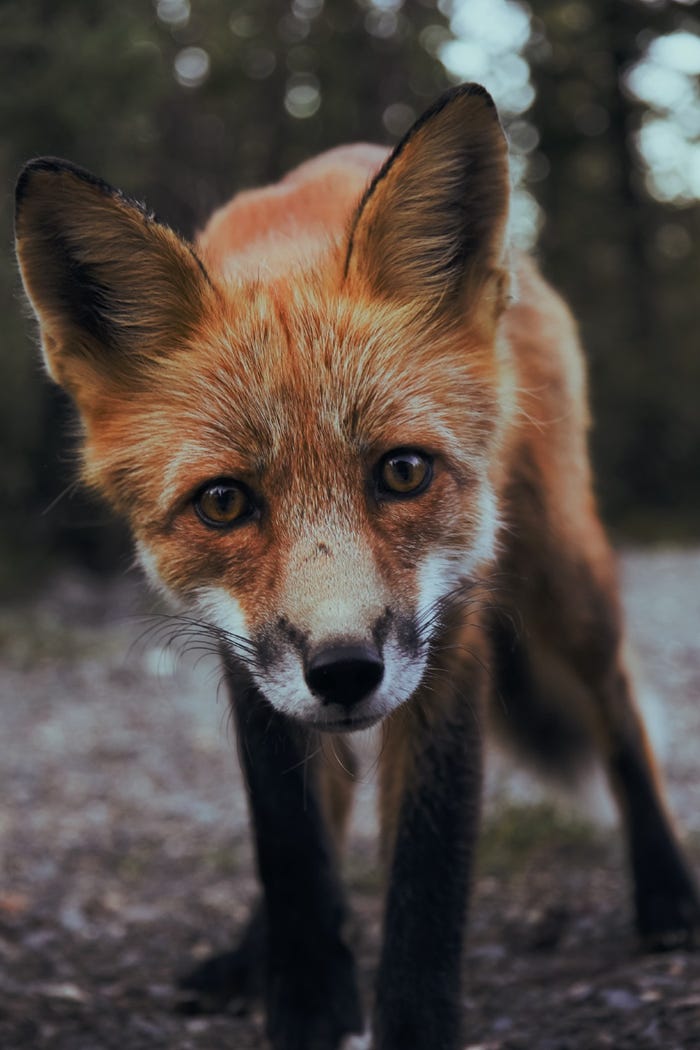
About a third of native wildlife in the United States is endangered or at risk of extinction.
According to State wildlife agencies, more than 12,000 species in the U.S. need protection. The risk applies from migrating Monarch Butterflies to the Sierra Nevada Red Fox to the Blanding’s Turtle.
HERE’S THE GOOD NEWS: This past June the U.S. House of Representatives passed RAWA (acronym for Recovering America’s Wildlife Act).
If RAWA passes in the Senate and the President signs the Act, every year roughly US$1.3 Billion will be shared among U.S. States, US territories and Tribal nations to safeguard endangered and at risk species including animals, invertebrates (think butterflies), fish and plants.
This funding is in addition to existing funding and is expressly not intended to replace existing funds.
WHAT ABOUT THE ENDANGERED SPECIES ACT? That important and history-making law passed in 1973 still exists, but here are the shortcomings with the ESA:
It’s woefully underfunded which means many critters which qualify for listing under the ESA instead go on a wait list which is years long;
By the time a critter gets off the wait list on to the protected list, that critter may be on the brink of extinction;
Because the ESA functions through Federal planning and action, industries that would be potentially impacted (think logging, construction, agri-business) lobby as much as they can to keep species off the endangered species list.
THE RAWA CONCEPT: Senator Heinrich (New Mexico), one of the two original sponsors, compares this Act “to investing in primary care rather than waiting for a trip to the emergency room,“ according to The Washington Post.
HOW FUNDS WILL BE SHARED: Under the current draft of RAWA (S. 2372), funds will be divided according to each State’s population, geographic size and number of species at risk.
No State will get less than 1% of available funds and no State will get more than 5% of available funds.
RAWA requires at least 15% of the funds each State receives be spent on threatened or endangered species.
This is also a game changer for tribes who until now received NO federal funds to protect wildlife even though they own or manage more than 130 million acres in the U.S., according to the Native American Fish and Wildlife Society.
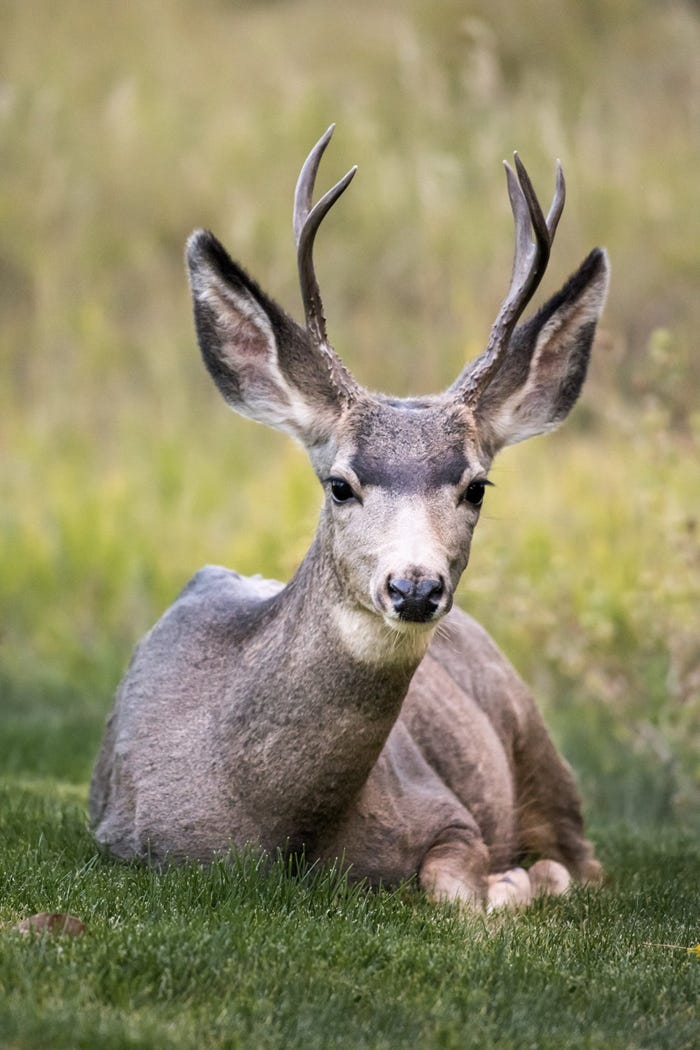
CURRENT FUNDING FOR WILDLIFE: Most of the current funding for wildlife (80%) comes from hunting and fishing licenses and taxes on guns, ammo and archery equipment. Yes, you read that correctly.
Congress established this structure back in 1937 in the Pittman-Robertson Act. The theory was that hunters and fishers were the biggest “users” of wildlife so they should pay for maintaining wild places and wildlife.
RAWA would amend the Pittman-Robertson Act to provide this additional money.
Here are some problems with basing environmental funding exclusively on the sale of hunting/fishing licenses and the sale of guns, ammo and archery equipment:
The popularity of hunting and fishing has been declining since 1960. Back in 1960, nearly 8% of the U.S. population regularly hunted. As of 2020, about 4.6% of the U.S. population were hunters. The percentage of fishers has also declined, but not quite as dramatically.
In order to increase available funding, dependency on hunting and fishing licenses puts State Wildlife Agencies and Commissions in the awkward position of needing to promote hunting and fishing to generate more license fees. These promotions are referred to as “3R promotions” to “recruit, retain and reactivate” hunters and fishers to stimulate license sales.
It also means that the majority of people (estimated at 75% according to Wildlife For All) who serve on State Wildlife Agencies and Commissions are either hunters/fishers or come from the agricultural industry. Some states require seats on these commissions be reserved for hunters, trappers and fishers. They are not people who come from the pro-animal well-being side of the community.
It also means that until now, most funds raised were spent on maintaining animals that were hunted and fish that fishers wanted to catch. That meant far less attention (think funding) devoted to non-hunted animals and non-sports fish.
STRANGE BEDFELLOWS: Shakespeare wrote “Misery acquaints a man with strange bedfellows” in his play “The Tempest.”
You may have come across the modern reworking of the phrase when you hear “politics makes strange bedfellows.” The implication is that people with few things in common can come together when they have shared political interests.
RAWA may be an example where this math can work. Here’s why:
RAWA is supported by a number of hunter/fisher organizations (Ducks Unlimited, Back Country Hunters and Anglers, Pheasants Forever, and many others), but it’s also supported by pro-animal and pro-environment organizations (National Wildlife Federation, Nature Conservancy, National Audubon Society, and many others) and by national newspapers and magazines (New York Times, Washington Post, Vox).
Because it is supported by the Congressional Sportsman’s Caucus and pro-hunting/fishing groups, 16 GOP Senators have signed on as co-sponsors of the Act. While being a co-sponsor does not guarantee a Senator will vote in favor of the Bill, it’s a hopeful indication.
If RAWA is passed, it will put money directly in the hands of State agencies who already have lists of currently endangered species within their States. By the way, in order to qualify for RAWA funds, States must provide a 25% funding match to the RAWA funds.
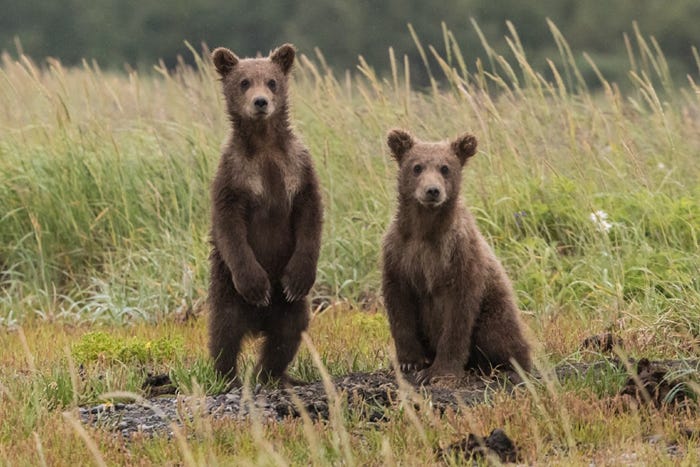
HOW YOU CAN HELP: E-Mail your Senators encouraging them to pass RAWA. This is not difficult and after you do this, you can give yourself a pat on the back at the end of the day! Here’s how:
If you don’t know the names of your Senators (each State has two Senators who represent the whole State), here’s how you find them: Google “who is my Senator?” You type in the State where you vote. Google brings up their names. The photos of your Senators will pop up. Directly below their photos are boxes that say “contact.”
A box pops up where your Senator asks “how can I help?” You click “Share my opinion.”
You then complete a few boxes with your name and contact information (so the Senator knows you are a voter in their State).
Then you may see a box that asks you to identify topic. You might write “animals” or “environment” (or what makes sense to you).
Then you will see a larger box where you can write something like “I support animals and the environment. Please support RAWA (S. 2372)”
Whether you live in a GOP-leaning State or a dem-leaning State, your voice makes a difference.
Fun Fact: If you never took action for the environment before, once you send this E-Mail to your Senators, you will have done so! Plus you can impress your friends by telling them you contacted your Senator about pending legislation! But wait, there’s more: once you have done this, you know the magic gateway, so you can contact your Senators again (and again) about other things on your mind!
I’m not sure whether this qualifies you as a full-on environmental activist, but maybe it does!!!!!
If you have friends or family who support the environment as bird watchers, nature lovers, campers, or hunters or fishers, please pass this information on!
If you want to learn more, Benji Jones wrote a great article in Vox which appeared on August 8, 2022.
August 2024 Update:
This is an update to the RAWA story that appeared in Medium in September 2022. The earlier version of RAWA ultimately did NOT pass the Senate in 2022. However, the good news is that there is a new version of RAWA called Recovering America’s Wildlife Act of 2023 (S. 1149). It would be very beneficial if this legislation were to pass and you can still contact your Senators through the instructions given in the original story below. However, instead of typing “I support animals and the environment. Please support RAWA (S. 2372),” you type the new Senate number S. 1149. By all accounts, RAWA is the gold standard of pro animal-pro-environment legislation.
On a more pesky note, the Chair of the House Committee on Natural Resources (Bruce Westerman from Arkansas), has proposed a competing Bill called the America’s Wildlife Habitat Conservation Act (“AWHCA”). AWHCA proposes about 20% of the overall funding benefit available under RAWA and would achieve funding through rescinding funding currently granted to NOAA (National Oceanic and Atmospheric Administration) for coastal resilience and conservation projects. Funding under AWHCA would also be subject to re-evaluation each year (meaning the environmental agencies who need certainty for planning purposes will Not have that needed certainty).
So, bottom line: we want to encourage the Senate to pass RAWA (S. 1149). If the Senate passes the Bill, it goes to the House. If the House does not approve RAWA this year, it is very important we all vote in November for Representatives who will support RAWA when it is re-introduced next year. If you support animals and the environment, support RAWA and make sure you vote this year!
L.E. Langner is an attorney admitted to practice in New York and Connecticut.
Sources used in preparing this article: Alliance for America’s Fish & Wildlife, Back Country Hunters and Anglers, Center For American Progress, Congress.GOV, Congressional Sportsmen’s Caucus, Ducks Unlimited, Native American Fish and Wildlife Society, National Audubon Society, National Wildlife Federation, Nature Conservancy, Pheasants Forever, The New York Times, Vox.com, The Washington Post, Wildlife For All.
© 2022 L. E. Langner. All rights reserved.